Motor yacht or sailing yacht: why most owners in Greece choose motor
Motor yacht or sailing yacht in Greece? Why most owners choose motor: day trips, comfort, speed and the Greek summer, plus when a sailing yacht still makes sense.
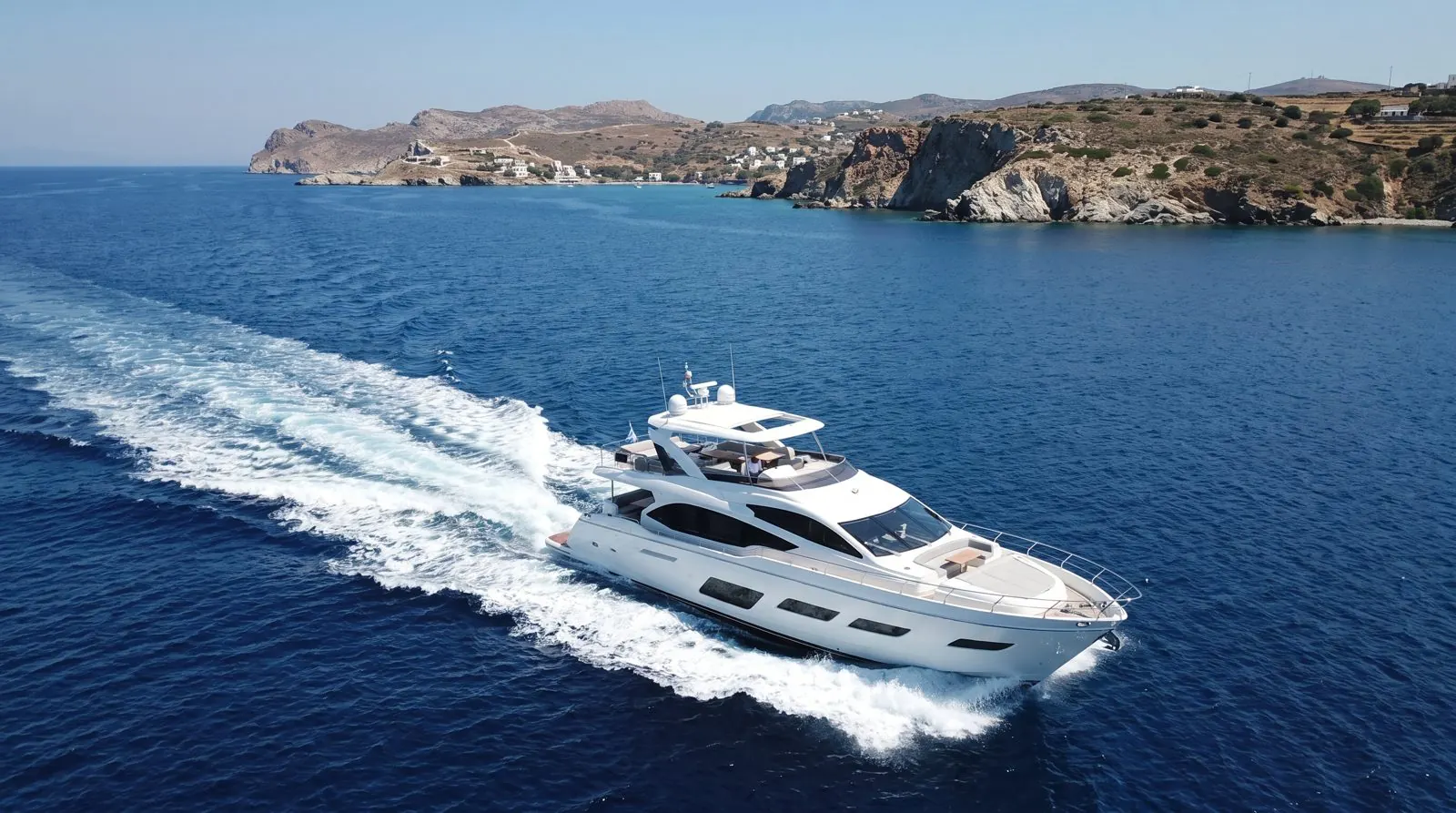
I spent years racing sailing yachts across oceans, yet most of the owners I work with in Greece end up buying a motor yacht, and for good reasons: day trips from Athens, guests who want comfort and speed, short summer seasons and islands an hour away. A sailing yacht is still the right boat for some owners. The answer depends on how you will really use her.
Start with your weeks, not the boat
- Mostly day trips and weekends from Athens, with guests who want to swim and eat well: a motor yacht gets you to Aegina, Poros or Hydra in an hour or two and back for dinner.
- One- or two-week cruises in the Cyclades or Ionian, where the journey is part of the holiday: a sailing yacht or catamaran is quieter, cheaper to run and more rewarding.
- Long seasons, many nights on board, plans to cross to Italy or further: a sailing yacht or a displacement motor yacht such as a trawler.
Running costs
Fuel is the big difference. A planing motor yacht of 15–20 m can burn hundreds of litres an hour at cruising speed; a sailing yacht of the same length motors for a few litres an hour and sails for free. Motor yachts also usually have more engine hours to service, more systems and higher insurance. Sailing yachts add sails and rigging, replaced every few years. Read what it really costs to own a yacht.
Space and comfort
At the same length, a motor yacht has more interior volume, a flybridge, and big open decks; a catamaran has the most space of all. A monohull sailing yacht heels under sail and has less volume, but moves more gently at anchor in a swell and is quieter on passage.
Speed and range
A planing motor yacht cruises at 20–30 knots; a sailing yacht at 6–8 knots. Speed shrinks the map, but in the Aegean summer, with the meltemi blowing force 5–7, a fast boat in a short steep sea is not always comfortable. A well-designed sailing yacht is often the more relaxed boat on a windy day.
Skills and crew
A small motor yacht is easy to learn to drive; a sailing yacht asks for more skill, though modern furling and electric winches make a 40–50 ft boat manageable by a couple. Above about 20 m, either type usually needs a professional captain.
Resale
Popular production sailing yachts and catamarans hold their value well, helped by the charter market. Motor yachts depreciate faster in the first years, then flatten; engine hours and maintenance records weigh heavily on the price.
Five questions to decide
- How many days a year will you really use her, and for how long each time?
- Who comes on board, and do they want speed or calm?
- Where will she be based, and how far do you want to go?
- What is your yearly running budget, not just the purchase price?
- Do you want to sail, or to be at sea?
The broker's view
If you are unsure, charter both types for a week before you buy. It is the cheapest lesson in yachting, and the boat you enjoy on the last day is usually the right one.
Frequently asked questions
Is a sailing yacht cheaper to run than a motor yacht?
Usually yes. Fuel is the biggest difference: a planing motor yacht can burn hundreds of litres an hour, while a sailing yacht uses little fuel. Sails and rigging add some cost.
Which is better for the Greek islands?
For day trips from Athens, a motor yacht. For week-long cruises in the Cyclades or Ionian, many owners prefer a sailing yacht or catamaran, especially in meltemi season.
Can a couple handle a sailing yacht alone?
Yes, up to about 45–50 ft with modern furling sails and electric winches, if at least one of them is an experienced sailor.
Looking for a yacht?
Tell us what you need and we will search the whole market for you, including boats that are not online yet.
Related yachts
Keep reading
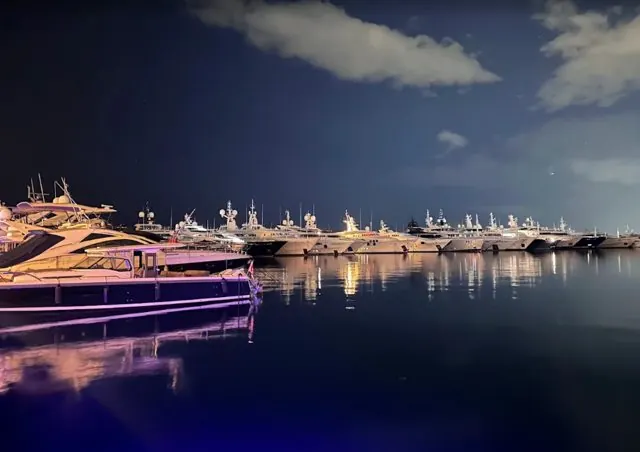
How to buy a used yacht in Greece: the complete guide
Step by step: how to buy a used yacht in Greece, from shortlist and offer to survey, sea trial, VAT checks, contract and registration. Written by a yacht broker in Athens.
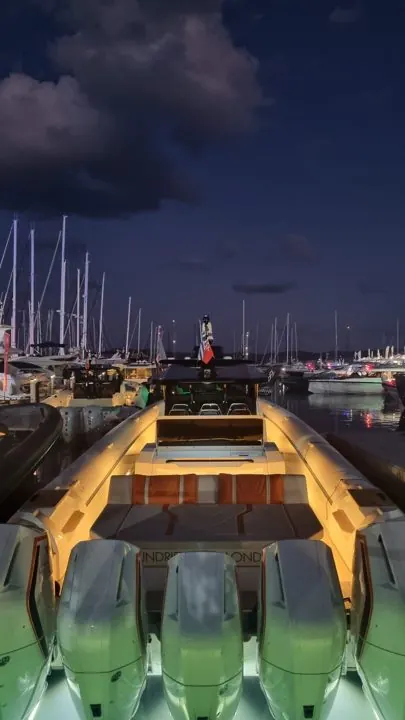
Yacht VAT explained: what “VAT paid” and “VAT not paid” really mean
What VAT paid and VAT not paid mean on a yacht listing, how VAT status affects price and use in the EU, what proof to ask for, and the mistakes that cost buyers money.
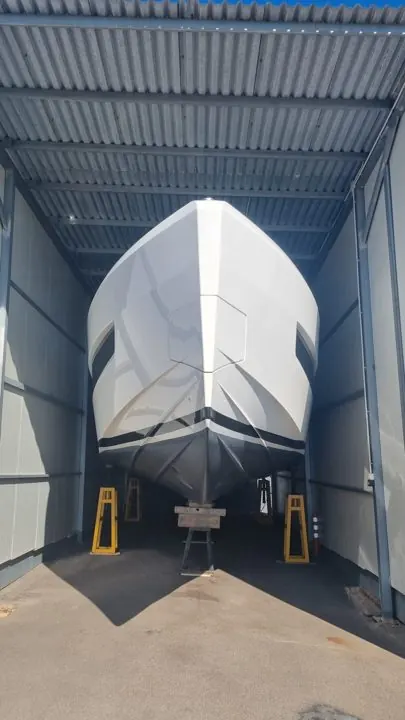
Yacht survey and sea trial: how they work and what to check
What a pre-purchase yacht survey covers, how long it takes, what it costs, how a sea trial works and how to use the results to renegotiate the price.